
Kathi Mitchell’s long road for immigrant advocacy
On a marathon day, the Canton, Minnesota, resident helped immigrants from Postville, Iowa, check in with ICE in Cedar Rapids before she served lunch to a statewide church gathering in Des Moines.

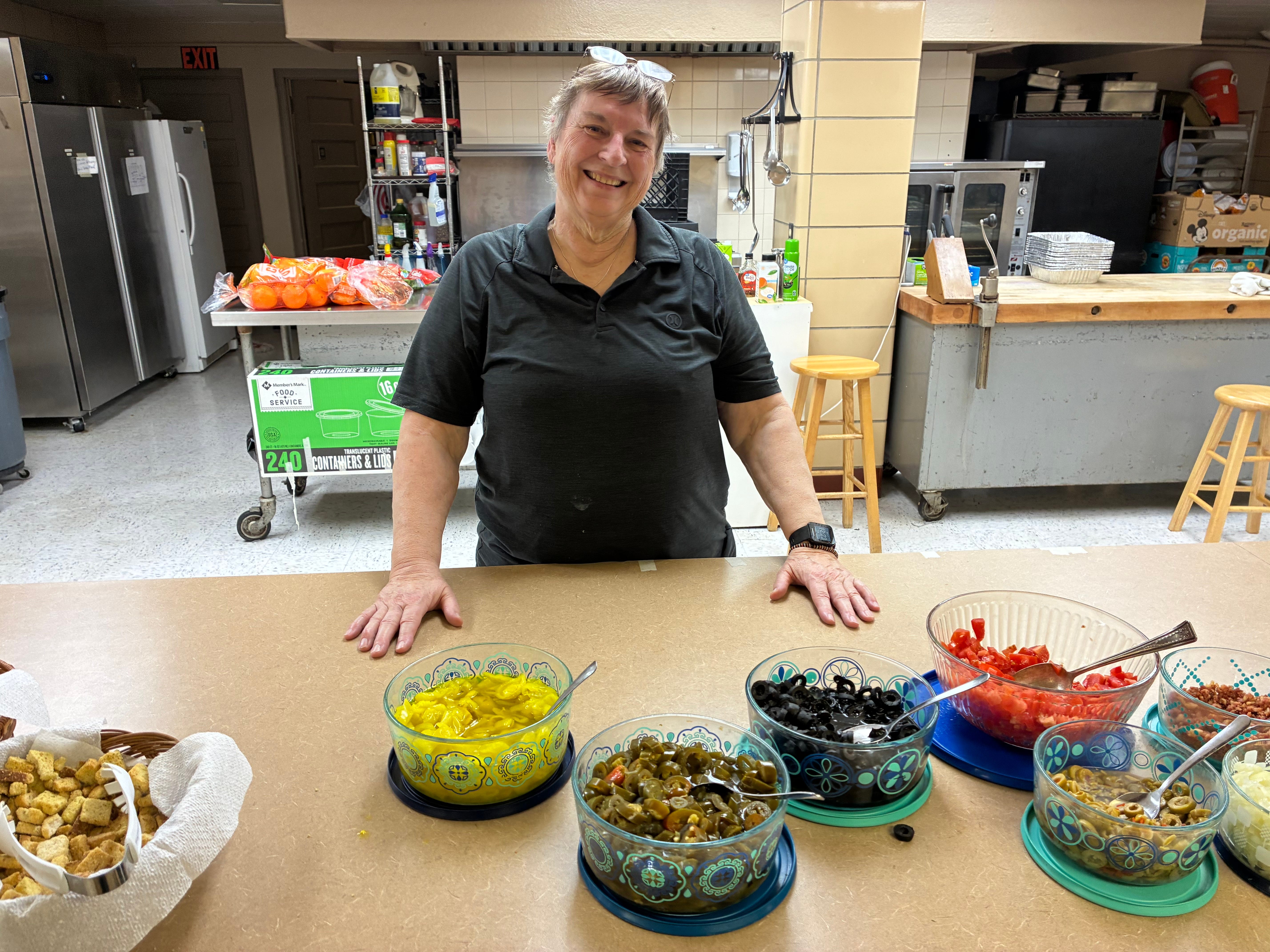
Kathi Mitchell had quite a day Tuesday, Feb. 3, after pulling herself out of bed in Canton, Minnesota at 3:30 a.m.
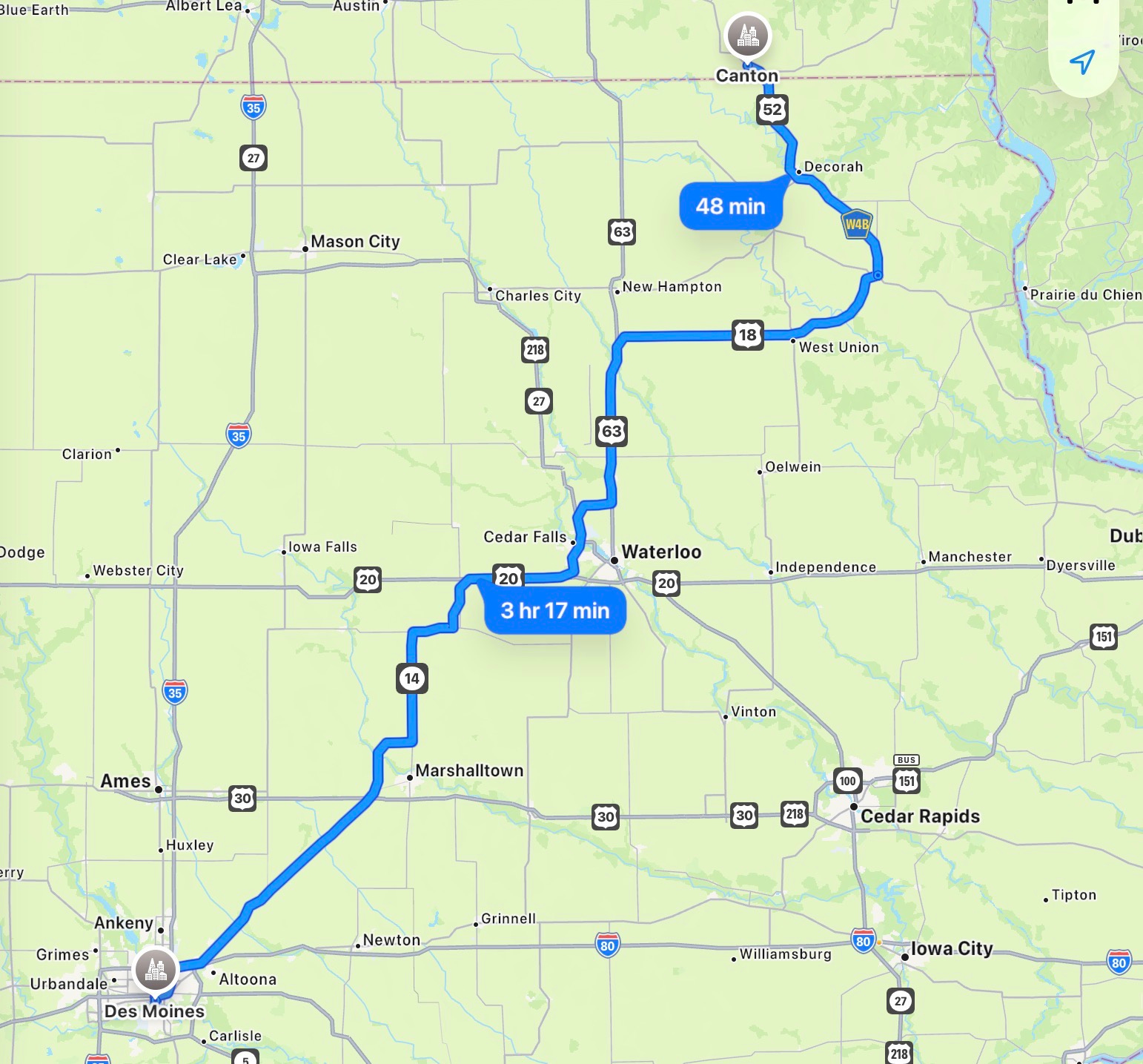
By noon, she had been to Postville, Iowa and Cedar Rapids, Iowa before serving lunch in a church basement in Des Moines, Iowa. That is a little more than 230 miles — more than four hours’ road time — before the volunteer lunch gig.
It was one of several trips she has made for nearly 18 years to support immigrant families in Iowa.
“I’ve been involved in this since I was a social action coordinator several years ago,” Mitchell, 71, said.
Crazy, right? But, she has been doing this kind of immigrant support work as a volunteer since the 2008 federal raid on the former Agriprocessors plant that disrupted life immeasurably in Postville. Three hundred eighty-nine undocumented immigrants — or one of every five residents in the northeast Iowa town — were arrested in that raid.
On Feb. 3, she picked up immigrant Iowans from two Postville homes a little before 5 a.m. to drive them to annual status check-ins at the Immigration and Customs Enforcement office in Cedar Rapids. Check-ins begin at 8 a.m., and she likes to get to the office early enough to calm fears about missing an appointment, she said.
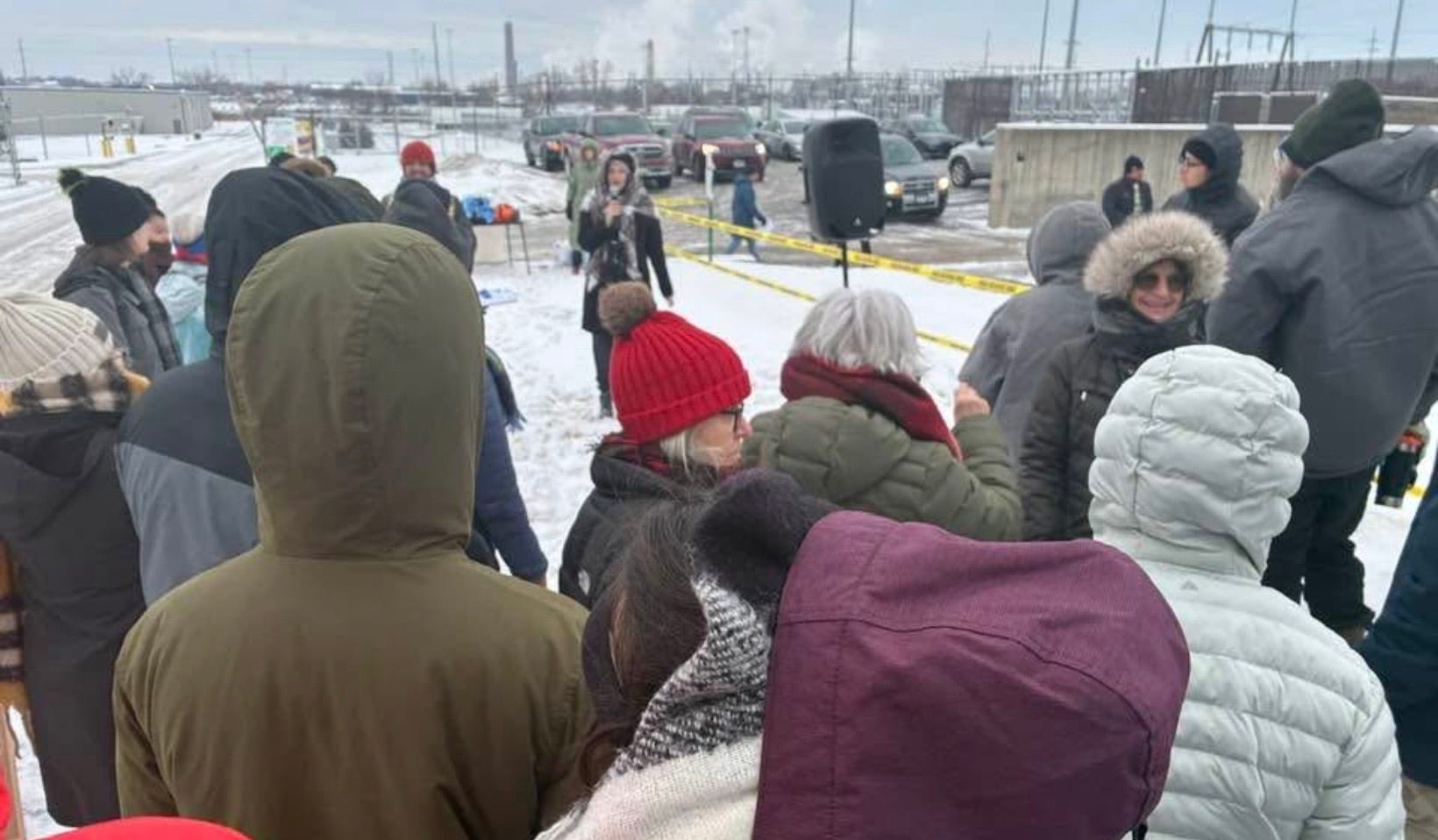
“Number one, because there’s a large protest group that gathers outside, they’re making it difficult to drive through the crowd to get to the parking area,” she said about getting there early. “And the other thing is we have a time commitment to make this trip. So the sooner you get in, the sooner you can get on the road and get to where you need to be.”
On this particular day, she needed to go to Des Moines’ Grace United Methodist Church on Cottage Grove Avenue, where a statewide gathering of United Methodists prepared to visit the Iowa Statehouse to talk with anyone who would listen about social justice issues and to pray. Mitchell provided the group with gourmet soups and accompanying food.
She arrived in Des Moines around 10:45 a.m.
Backing up the story a bit, Mitchell also drove to the Des Moines church from her home two miles north of the Minnesota-Iowa border on Sunday, Feb. 1, to deliver the soups so that other helpers could heat them Tuesday while she drove in from Cedar Rapids.
“I do catering for charity,” she said. Meal ticket proceeds and tips go to the non-profit Iowa Migration Movement for Justice, which coordinates support programs for the state’s immigrants.
Mitchell said the 2008 Agriprocessors raid left a lasting impression on her. Families were displaced. Children remained in their schools, for example, not knowing many of their parents had been taken to the Cattle Congress fairgrounds in Waterloo for deportation processing.
“You know, children were traumatized — children at school — a lot,” she said. “I know a couple of people stayed at school with the children because it wasn’t safe for them to leave.”
“First of all, no one knew if there was family there for them to go home to,” Mitchell said. “It was just a chaotic, traumatic time. So I did a lot of transporting people. I delivered food resources, that type of thing. So, yeah, I went in knee-deep then.”
Federal agents took the workers into custody May 12, 2008. Eventually, Agriprocessors CEO Sholom Rubashkin was sentenced to 27 years in federal prison after a U.S. District Court jury convicted him in November 2009 of 86 counts of financial fraud and related offenses. He was acquitted in May 2010 in state court of 67 counts of child labor violations after federal officials found 26 immigrant teenagers working at the plant.
Rubashkin, now 66, testified in trial that he did not know about the underaged workers. President Trump commuted Rubashkin’s federal sentence in 2017, with bipartisan Congress support.
Transparency: One of my cousins, Barbara Herzmann, was a third grade teacher at Postville’s public school when that raid hit town. Her students were in the high school building for music and she was looking out a window at the playground when she saw several helicopters circling the town, she recalled this month.
“I still have flashbacks to the raid when I hear a helicopter,” Barb said when I let her know I was mentioning the raid in a column.
PLAYING IT SAFE
Mitchell is cautious about what she reveals regarding driving immigrant Iowans to ICE check-ins. Still, she said, people know her at the Cedar Rapids office.
“I want to be totally honest when I answer your questions, but I also want to express concern that I’m in a role where I need to keep a low profile,” she said when we talked.
ICE officials in Cedar Rapids know her because she formerly accompanied immigrants she brought to town into the building and in the immigrants’ interviews. ICE stopped allowing that practice the week of Sept. 8.
Immigrants going to check-ins fill out observer forms that include their full names, birth dates and identification numbers, as well as their attorney’s name — if they have one — and phone number. Those who are parents state where a child should be taken if they are detained.
Back to Feb. 3.
“So we arrived at Homeland Security,” she said. “I will say that I’m very nervous for several days ahead of this. I’m extremely nervous when I send them off to stand in line and wait, and I pray,” she said.
“I’m afraid they’re going to be detained because even though these are all people who have no crimes and are involved in the process of seeking asylum, it doesn’t matter.”
A FactCheck.org analysis late last month, using publicly available ICE data, found that around 43% of the people ICE is detaining have no convictions or criminal charges. That is two of every five people.
Moreover, the risk for non-criminal detention doubled that of a year ago. Fact-check.org’s analysis, relying on the Deportation Data Project, showed the share of those with no criminal record has jumped from 22% in Donald Trump’s first three months in office, to 34% in his next three months, to 40.5% in the next three, which closed out the last federal fiscal year.
Homeland Security says the share is 74%, which independent analysis that includes the department’s own data does not support. The DHS online post with that data conflate any criminal charges, such as speeding or failure to pay a fine with those against hardline murderers, drug traffickers and other hardened criminals whom any reasonable person would agree should not be roaming the United States.
For the truth, CBS News obtained ICE documents showing that fewer than 14% of the 400,000 immigrants arrested last year had been charged with or convicted of violent crimes.
“The goal, when they talk about the criminal, they’re talking about all people of color, all immigrants that they want to remove from here,” Peter Pedemonti, founding member and co-director of New Sanctuary Movement of Philadelphia, said for a Feb. 11 OSV News story by Gina Christian about Catholic disgust with the “worst-of-the-worst” lie used to deport immigrants from the United States.
Meantime, immigration deportation efforts are giving fits to the agriculture industry Kathi Mitchell had to leave all those years ago. A recent Investigate Midwest review of court records, U.S. DHS documents and interviews showed a large share of ag workers being detained have with no criminal records. Families are separated and farmers and meatpacking plants are having difficulty finding workers to fill the gaps because of the immigrant crackdown, Investigate Midwest reported.

STILL ACTIVE AFTER LIFE CHANGES
Mitchell has lived an eclectic life. She worked 25 years in the dairy industry as a milk-plant field representative before becoming a dairy herdsman and then managing her own dairy in the 1980s.
She has endured loss. A single mother, her daughter, Amy Yvonne, died in 1985 at the age of 4-and-a-half months. Amy was born a month early in June that year and spent 13 days in a NICU unit. Once the baby could go home, Mitchell welded a car seat onto the back of a tractor and put Amy in a buggy in the dairy barn while Mitchell milked cows.
Amy succumbed to a seizure that caused major brain damage. Mitchell donated her daughter’s tiny liver to a 2-year-old child in Michigan but that child eventually died, too. “I wrote the child’s parents so they knew that I was happy their child had at least a short time of ‘normalcy’ and the research gained will benefit future children. A strong legacy for both of our children,” Mitchell was willing to share in one of several conversations and email exchanges we have had.
Medical bills for Amy mounted in her short time on earth and this was during the 1980s farm crisis. Unable to hire help for her one-person operation, Mitchell said she lost the farm business to bankruptcy. However, she rebounded and became an in-home family therapist and child-welfare provider for several years.
She still works three days a week in Decorah at Crossroads Academy, a private special-education school for K-12 children from 12 school districts who have emotional and behavioral challenges. There, she manages Medicaid billing, oversees individual education programs, manages records and behavioral data, and works with children and families dealing with mental health support.
She did her earlier volunteer immigration work out of First United Methodist Church in Decorah; now she is at Burr Oak United Methodist Church north of Decorah. Before her Iowa immigration work, she said, she volunteered as long ago as 1999 for sister-city missions in Guatemala and El Salvador that focused on solidarity and home visits rather than charity.
She also started a Spanish-language academy in Decorah that met once a month when at its peak.
“I started that in 2002 and then, in 2008, the raid happened, and I lost most of my families,” Mitchell said. “So my efforts switched to serving the immigrant population and what their needs were at the time.”
She has helped Haitians moving from Cedar Rapids to Postville to work at Agri Star. Haitians also are in Trump’s crosshairs. “Over the weekend I delivered 2 Queens, 1 Full, and a Twin over Twin Bunk bed - all with bedding. Also and dining table with 5 chairs and 2 dressers,” Mitchell wrote to me in an email last week.
The Feb. 3 trip to ICE was typical of the excursions Mitchell has made with immigrant Iowans.
“I arrived in Cedar Rapids at about 10 after 7 and, of course, they do not have any restroom facilities provided at the Homeland Security building for immigrants,” she said, referring to the outdoor line those checking in must join. “So we always stop at the Casey’s nearby and make sure we use the baño, grab something to drink. I always let them know we’ll have breakfast afterward.”
She recalls the day police told people like her who had accompanied immigrants they no longer could enter the building.
“Police officers came to remove us from the waiting area and asked us to go on the other side of the yellow tape. And I looked at him and said, ‘I’m not part of that group. I brought people from northeast Iowa that I’m waiting for,’” Mitchell recalled.
“He didn’t believe me. So he asked me for my name and birth date. And luckily, just as I think he was probably going to arrest me, my people came out.”
She looked at the officer and said, “These are my people. Can I go back to northeast Iowa?” she recalled.
“He gave me this kind of shocked look, and then he said, ‘Yes.’”
“But this was my first trip after that experience,” she said about the Feb. 3 trip. To prepare, she checked the night before by email with an ICE officer she knew about the safest way to get the Iowans from Postville through the check-in and to let him know her car would be in the parking lot. She explained the arrangement to the immigrants as they filled out the information form they would need if they were detained.
Mitchell asked a man on the trip to hold a place in line so a woman she brought with a 4-year-old child could wait in the warm car. The temperature at 7:52 a.m. that day was 21 degrees.
“Luckily, the check-in went smoothly,” Mitchell said. “They have appointments for one year from now, so hopefully all is well with those families.”
Thanks, in large part, to volunteers like her.
I am a proud member of the Iowa Writers’ Collaborative. Check out their most recent and important reporting in this week’s summary of their work.

We've been friends with Kathi for almost 40 years. Her services extend to the whole community in many ways. When she transports furnishings to immigrants, she helps those of us who need to downsize and prefer to have our belongings go to those who need them.
Kathi is an everyday hero, humbly going about her holy work and changing lives.